



Read Time: 5 Minutes
- Watch the home: Expired food, unwashed laundry, and stacked mail are gradual but telling signs a parent is struggling to cope
- They won’t tell you: Pride, fear, or lack of self-awareness keeps most parents from asking for help – decline often shows in the house first
- Start gently: Lead with care not criticism, listen for what’s underneath their answer, and begin the broader conversation about next steps before a crisis forces it
Maybe you couldn’t put your finger on it right away – but then you noticed the pile of unopened mail on the counter, the fridge with expired food still on the shelf, the bathroom that hadn’t been cleaned in a while. Or maybe it was more obvious: dishes stacked in the sink, floors you wouldn’t walk on barefoot, a smell you couldn’t quite place.
The home doesn’t lie. And what you’re seeing may be one of the clearest early signs that your parent needs more support than they’re currently getting.
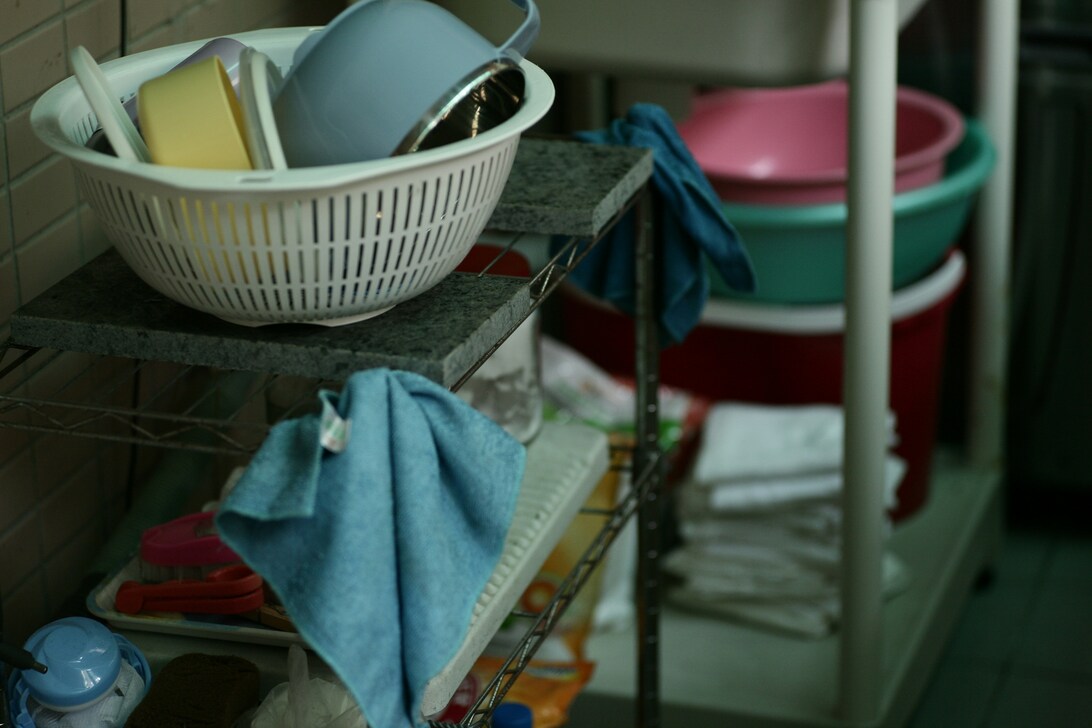
What to Look For Room by Room
A home that’s always been tidy doesn’t become neglected overnight. It happens gradually and that gradual shift is exactly what makes it easy to explain away on any individual visit.
Here’s what deserves a second look:
Kitchen – Eating well requires planning, shopping, and the physical ability to cook – any of these can quietly slip.
- Expired food still on the shelf or in the fridge
- Dishes left unwashed for days
- Heavy buildup on the stove or countertop
- A near-empty fridge
- ⚠️ Burned pots or evidence of forgotten food on the stove – this is a safety concern, not just a housekeeping one, and warrants immediate attention
Floors & Surfaces – Vacuuming and mopping require energy and mobility that may no longer be there.
- Caked-on dirt or sticky floors
- Dust that’s clearly been accumulating for months
- Carpets that haven’t been vacuumed in a long time
- Surfaces that haven’t been wiped down in a long time
Bathroom – Personal hygiene changes often show up here first – both in the space itself and in how your parent looks and smells when you arrive.
- Soap scum, mold, or grime that’s built up over time in the bathroom
- Towels that haven’t been changed or washed recently
- Missing or depleted personal care products
- Indications that they haven’t showered in a while
Laundry – This can signal fatigue, cognitive changes, or difficulty managing stairs to a basement washer.
- Clothing worn repeatedly without washing
- A pile of laundry that hasn’t been touched in weeks
Mail & Paperwork – Managing finances and correspondence takes cognitive sharpness – often one of the first things to shift.
- Unopened envelopes stacking up
- Overdue notices visible on the counter
- Bills or papers scattered with no apparent system
Why It Happens – And Why Parents Don’t Say So
Most parents won’t tell you they’re struggling to keep up. Pride, fear of losing independence, not wanting to worry you, or simply not recognizing the change themselves – there are many reasons the conversation doesn’t happen until something forces it.
It’s often a sign of physical decline, cognitive changes, depression, or simply being overwhelmed by a home that’s become too much to manage alone. The house they’ve lived in for decades can quietly become a burden.
How to Bring It Up

This is a delicate conversation, and how you start it matters. Walking in and pointing out the mess will almost always put a parent on the defensive. Instead:
Lead with care, not criticism. “I want to make sure you’re feeling okay – I noticed a few things around the house and I just want to check in.” Give them the chance to tell you what’s been hard before you offer solutions.
And listen for what’s underneath the answer. “I’ve just been tired lately” or “it’s hard to get around” tells you a lot.
What Comes Next
A home in disarray is often the first visible signal that a broader conversation about care and living arrangements needs to happen – even if no one is quite ready to have it yet. That might mean exploring home support services, looking at downsizing options, or beginning to think about what the next chapter actually looks like.
Those conversations are hard and you should expect resistance as the first reaction. But they’re much easier to navigate now, before a crisis forces the harder conversations and limited options.
You can also do research on your own so you feel confident in the type of information and advice that you’re giving them.
Thinking about what’s next for your parent’s living situation? Home to Home helps families navigate the transition from family home to the right next step – with guidance, resources, and support for every part of the process. We can help you prepare for that first conversation with your parent. Contact us to learn more!
Start the conversation with Home to Home →
Tags: aging, downsizing, eldercare, home